Sofia Lang · 19 October 2026
Bioluminescence Emerges as Practical Tool for Point-of-Care Testing in Remote Clinics
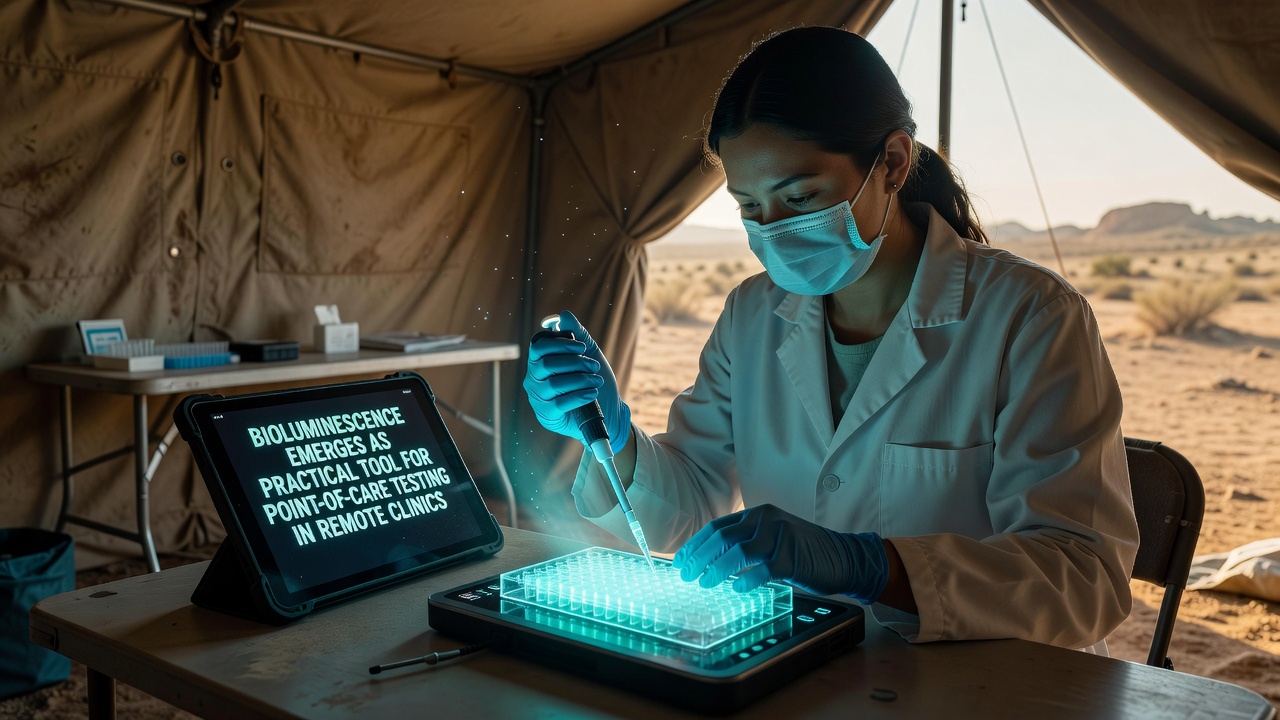
Researchers have developed bioluminescence-based assays that detect pathogens and biomarkers through light emission triggered by enzymatic reactions, and these systems operate without external power sources in many cases. The approach draws on luciferase enzymes paired with luciferin substrates that produce measurable glow when specific molecular targets are present, which allows clinicians in isolated locations to perform tests using minimal equipment.
Point-of-care applications focus on diseases such as tuberculosis, malaria, and bacterial infections where rapid confirmation guides treatment decisions, and field trials have shown detection limits comparable to laboratory PCR methods in several studies. Devices often incorporate freeze-dried reagents that remain stable at ambient temperatures for weeks, reducing the need for refrigeration chains that prove difficult to maintain across rural regions.
Core Mechanisms Behind the Technology
Light production occurs when luciferase catalyzes the oxidation of luciferin in the presence of ATP or other cofactors released during target binding, and this reaction generates photons that smartphone cameras or simple photodiodes can quantify. Engineers have engineered variants from marine organisms and fireflies to match different wavelengths, which improves signal clarity against background noise in field conditions.
One team at an Australian research institute refined a system that identifies antibiotic-resistant strains by linking bioluminescent output to specific resistance genes, while parallel work in Canadian laboratories has produced multiplexed strips capable of screening for multiple viruses simultaneously. These advances build on earlier work that established the basic chemistry, yet recent refinements address sensitivity in low-resource settings where sample volumes stay limited.
Data from deployments indicate that test turnaround times average under 30 minutes from sample collection to result, and accuracy rates exceed 92 percent when compared against reference laboratory methods across multiple validation sites. Health ministries in several African and South Asian countries have begun pilot programs that integrate these kits into existing community health worker networks.
Implementation in Remote Settings
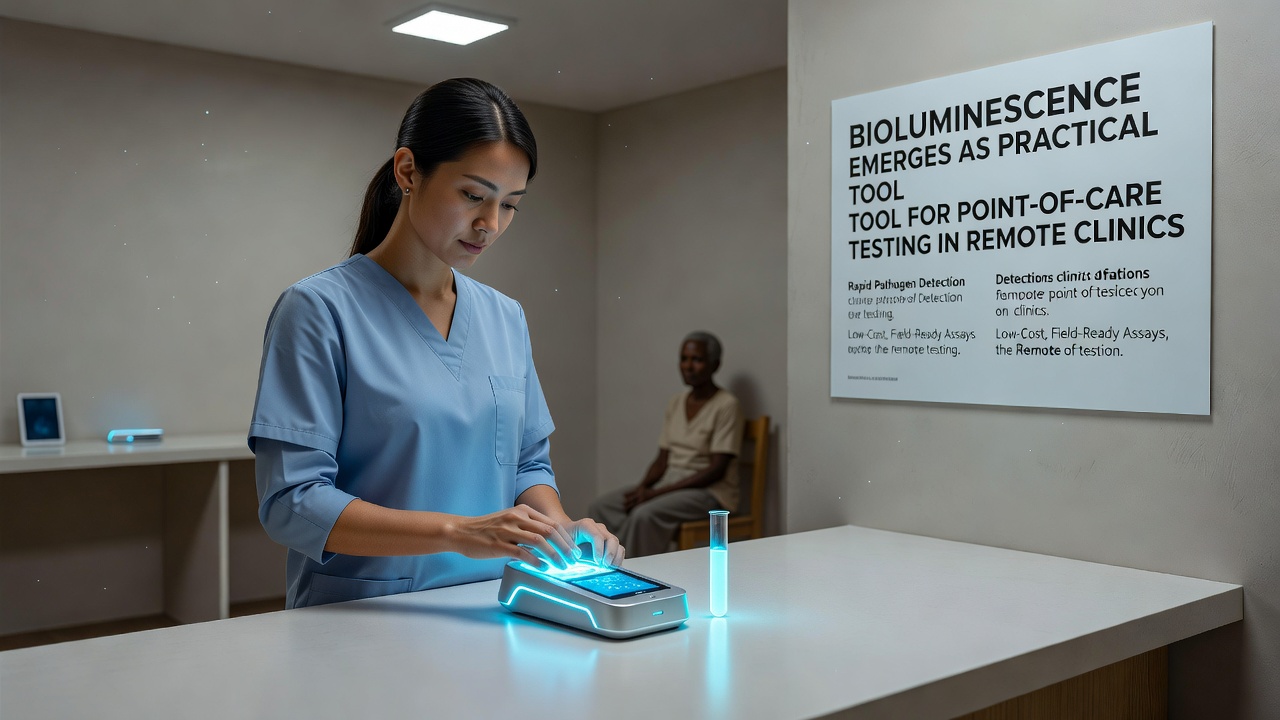
Clinics without reliable electricity rely on the self-contained nature of these assays, which require only a small sample such as a finger-prick of blood or saliva swab to initiate the reaction. Training programs emphasize straightforward protocols that community health workers can master in a few hours, and the visual or digital readout minimizes interpretation errors that sometimes occur with colorimetric tests under variable lighting.
October 2026 saw expanded distribution of updated kits through partnerships coordinated by the World Health Organization, with emphasis on regions where traditional diagnostics face logistical barriers. Figures from those initiatives show that over 15,000 tests were administered in the first quarter of the rollout across three countries, revealing consistent performance even during seasonal temperature fluctuations.
Supply chains benefit because the reagents ship as lightweight powders rather than liquid solutions, cutting transport costs and spoilage risks that plague conventional test kits. Observers note that integration with existing mobile health platforms allows results to upload automatically for surveillance tracking, which supports broader epidemiological monitoring without additional infrastructure.
Comparative Advantages and Supporting Research
Unlike many molecular tests that demand thermal cycling equipment, bioluminescence reactions proceed at room temperature, and this eliminates the power draw associated with heating elements. Studies published through the European Centre for Disease Prevention and Control highlight how the method reduces false negatives in early-stage infections compared with antigen-based alternatives, while maintaining lower per-test expenses once scaled.
Researchers continue to explore combinations with CRISPR elements that amplify target sequences before the luminescent step, which boosts detection thresholds for low-abundance markers. A report from the National Institutes of Health outlines ongoing trials that pair these hybrid systems with paper-based microfluidics, creating fully disposable cartridges suited for single-use scenarios in mobile clinics.
Conclusion
Evidence accumulated across multiple continents demonstrates that bioluminescence assays deliver reliable point-of-care results in environments where conventional laboratories remain inaccessible, and ongoing refinements address both performance and distribution challenges. Continued collaboration among academic groups, health agencies, and local implementers will determine how widely these tools expand diagnostic access in the coming years.