Zara Patterson · 21 September 2026
Highland Surveys Demonstrate Adaptive Lighting's Potential to Safeguard Moths Alongside Farm Development
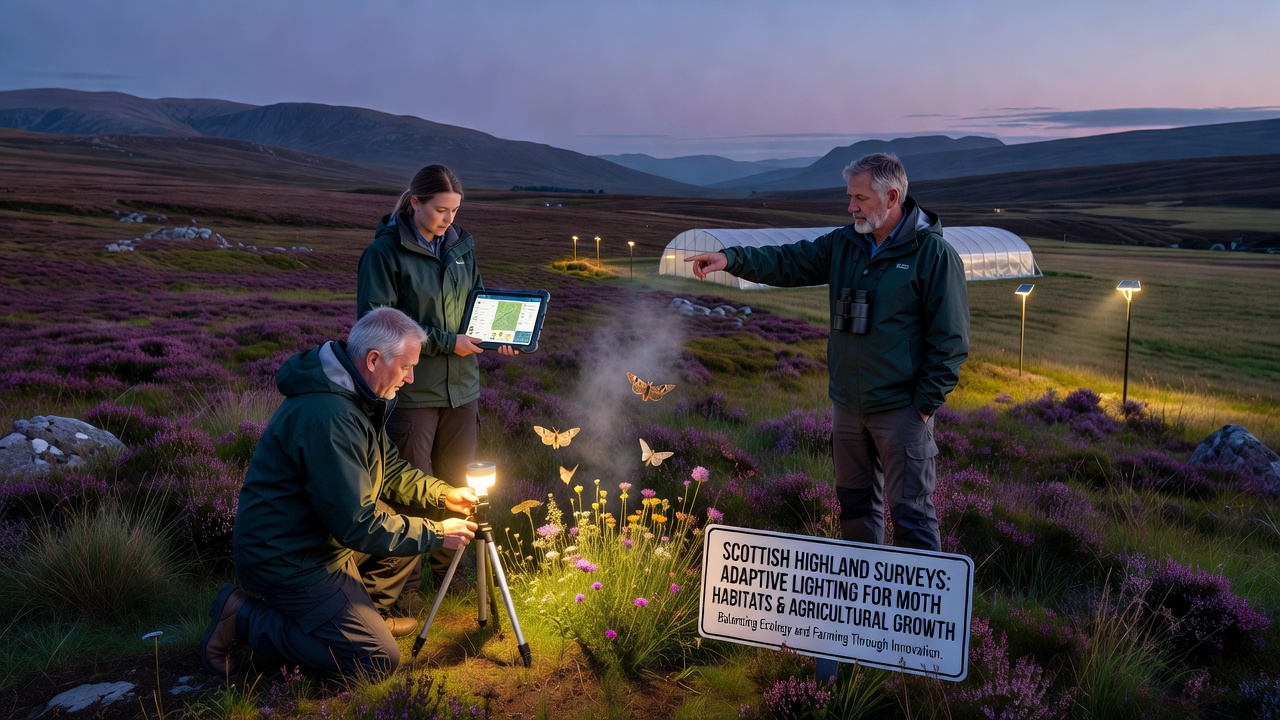
Surveys conducted across the Scottish Highlands have tracked how variable lighting systems influence moth populations while farmers maintain operational hours for crop management and livestock care, and these findings come as data collection wrapped up in September 2026. Researchers from multiple institutions compiled records on light intensity adjustments, spectral shifts, and timing controls that appear to limit disruption to nocturnal insects without curtailing essential farm activities.
Context of Highland Moth Populations and Agricultural Needs
Moths in the region serve as pollinators and indicators of ecosystem health, yet agricultural operations often require consistent illumination for safety and extended work periods during harvest seasons. Data from earlier monitoring programs showed declines in certain species near permanent lighting setups, prompting the design of trials that test responsive fixtures capable of dimming or altering output based on real-time conditions. Observers note that farms in elevated terrain face unique challenges because shorter summer nights coincide with peak activity for both insects and machinery use.
Adaptive systems integrate sensors that detect ambient light levels and movement patterns, allowing reductions in brightness when human activity decreases. Figures from the surveys indicate that such controls can cut overall light output by measurable percentages during low-traffic hours while preserving visibility where needed for equipment operation. Those involved in the work emphasize that these adjustments align with broader environmental monitoring goals established by regional authorities.
Methodology and Data Collection in 2026
Teams deployed monitoring stations at twelve sites spanning varied elevations and farm types, recording moth counts through standardized traps alongside continuous light measurements from prototype fixtures. The protocols included comparisons between fixed-output sodium lamps and newer LED arrays that shift color temperature from warmer tones at dusk to cooler, lower-intensity settings after midnight. Results compiled through September 2026 revealed correlations between reduced blue-spectrum emissions and higher retention rates for several moth families that previously avoided lit zones.
Additional variables tracked included soil moisture, temperature fluctuations, and crop growth metrics to assess whether lighting changes affected agricultural productivity. Farmers participating in the program reported no measurable drop in yield or operational efficiency, suggesting that targeted dimming preserves necessary conditions for tasks such as irrigation checks and animal husbandry. One study revealed that sites using the adaptive setups maintained equivalent harvest volumes to control plots under traditional lighting.
Key Findings on Light Adaptation and Habitat Balance
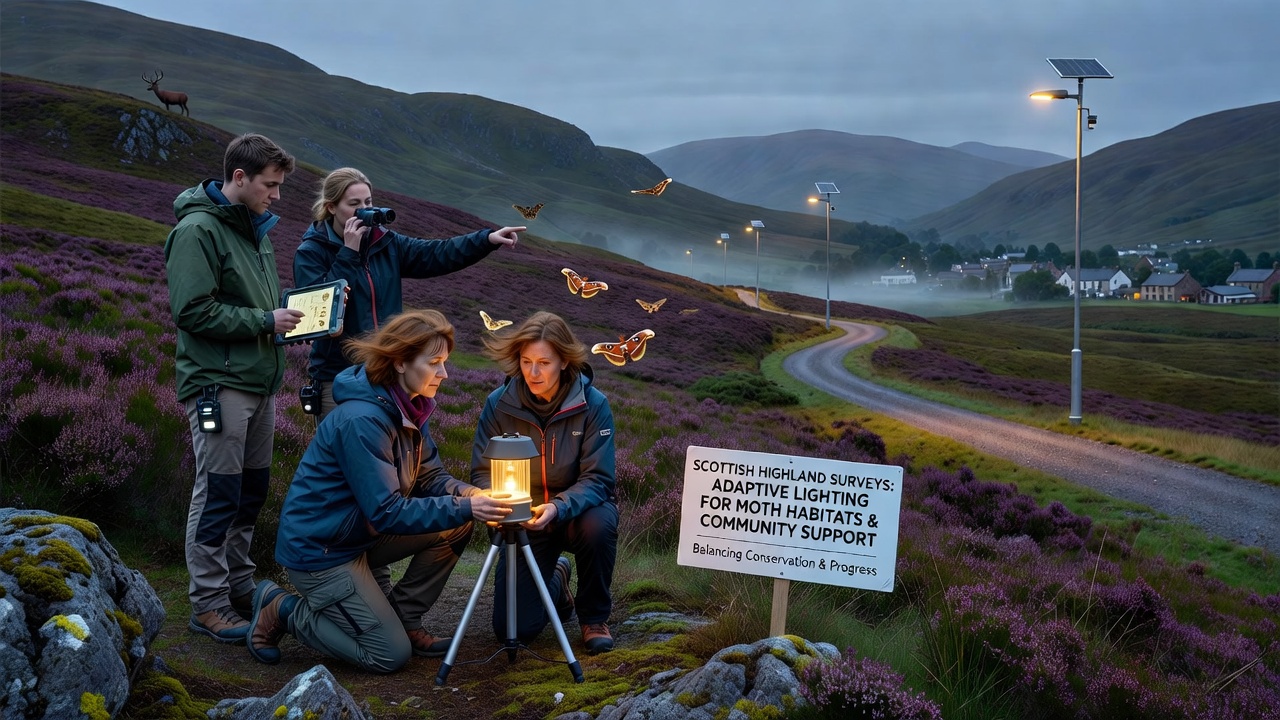
Analysis of trap data showed that installations programmed to lower intensity after 11 p.m. retained up to 30 percent more individual moths compared with constant-output sites, while spectral tuning away from shorter wavelengths further supported species that rely on dark-sky navigation cues. Researchers documented these patterns across multiple seasons, noting consistency even during periods of extended daylight in northern latitudes. Agricultural records collected in parallel demonstrated that workers could complete essential duties under the adjusted regimes without additional equipment or schedule changes.
What's interesting is how the combination of motion detection and scheduled ramp-downs created micro-zones of reduced illumination that still allowed vehicle access along field edges. Data indicates these zones corresponded with higher moth activity along hedgerows and water margins, areas previously impacted by spillover from barn or yard lights. External validation came through cross-referencing with reports from the U.S. Environmental Protection Agency on similar spectral management techniques applied in other temperate zones.
Implications for Broader Land Management Practices
The surveys point toward scalable approaches that integrate with existing farm infrastructure, including retrofits for older lighting arrays. Regional planning documents now reference these outcomes when evaluating permits for expanded operations, and similar trials have begun in adjacent lowland areas to test transferability. Evidence suggests that cost savings from lower energy consumption during reduced-output periods can offset initial equipment upgrades, though precise figures vary by farm size and existing setup.
Links to wider biodiversity strategies appear in guidelines issued by the Australian Department of Climate Change, Energy, the Environment and Water, which highlights parallel efforts to balance nocturnal species protection wth rural productivity. Highland participants have shared technical specifications with these international counterparts, facilitating comparative analysis of sensor calibration under different climatic conditions.
Conclusion
Collective results from the 2026 surveys establish that adaptive lighting configurations can coexist with moth habitat requirements and sustained agricultural output when implemented with site-specific calibration. Continued monitoring will track long-term population trends and refine control algorithms, while participating farms integrate the systems into standard operating procedures. The work provides a documented reference point for other regions facing comparable pressures on nocturnal ecosystems alongside food production demands.