Zara Patterson · 2 November 2026
Red-Light Wearables Launch Clinical Trials for Sleep Disorder Treatment in UK Health System
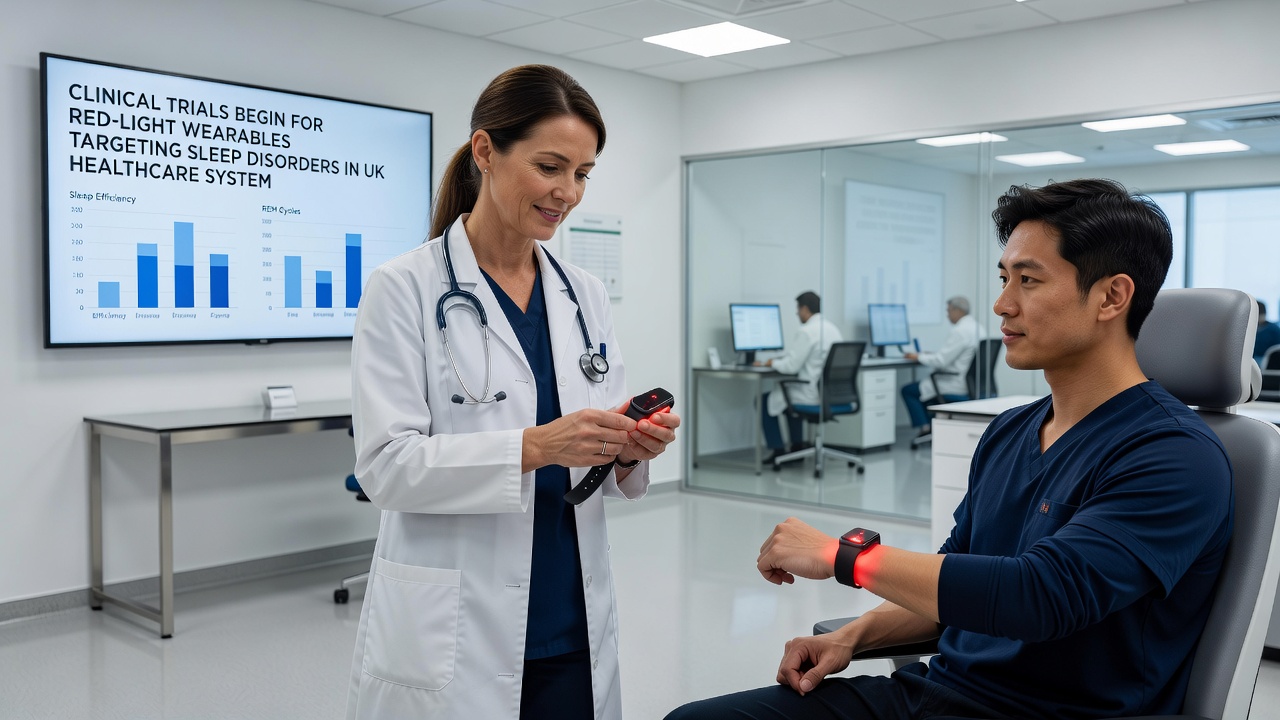
Clinical trials for red-light wearables designed to address sleep disorders have started within the UK healthcare system, with researchers focusing on how specific wavelengths might influence circadian rhythms and melatonin production in patients experiencing insomnia and related conditions. The initiative draws on prior studies that examined light exposure effects, and it incorporates data from international sources to shape protocols that align with existing National Health Service guidelines.
Background on Red-Light Applications in Sleep Research
Researchers discovered early on that red light in the 630 to 670 nanometer range interacts differently with retinal cells compared to blue light, which often disrupts evening rest, and this distinction prompted further examination of wearable formats that deliver controlled doses without requiring users to alter their entire bedroom environment. Studies conducted across multiple regions show consistent patterns where evening red-light exposure correlates with improved sleep onset times, and figures from the National Institutes of Health reveal that participants in controlled settings reported measurable shifts in sleep efficiency metrics after consistent use over several weeks.
UK teams have integrated these findings into local frameworks while collaborating with European regulatory bodies such as the European Medicines Agency to ensure device safety standards match broader continental requirements. Observers note that this approach avoids duplicating efforts already underway in other countries and instead builds on shared datasets that track long-term outcomes in diverse populations.
Trial Design and Participant Recruitment
The current trials recruit adults aged 25 to 65 who have documented sleep disorders through NHS referrals, and protocols call for participants to wear compact devices that emit red light at preset intervals during the pre-sleep period. Recruitment began ahead of the main phase scheduled for November 2026, allowing researchers to finalize baseline measurements and refine inclusion criteria based on initial feedback from pilot groups. Data collection includes wrist-worn actigraphy alongside self-reported sleep diaries, which together provide objective and subjective indicators of change.
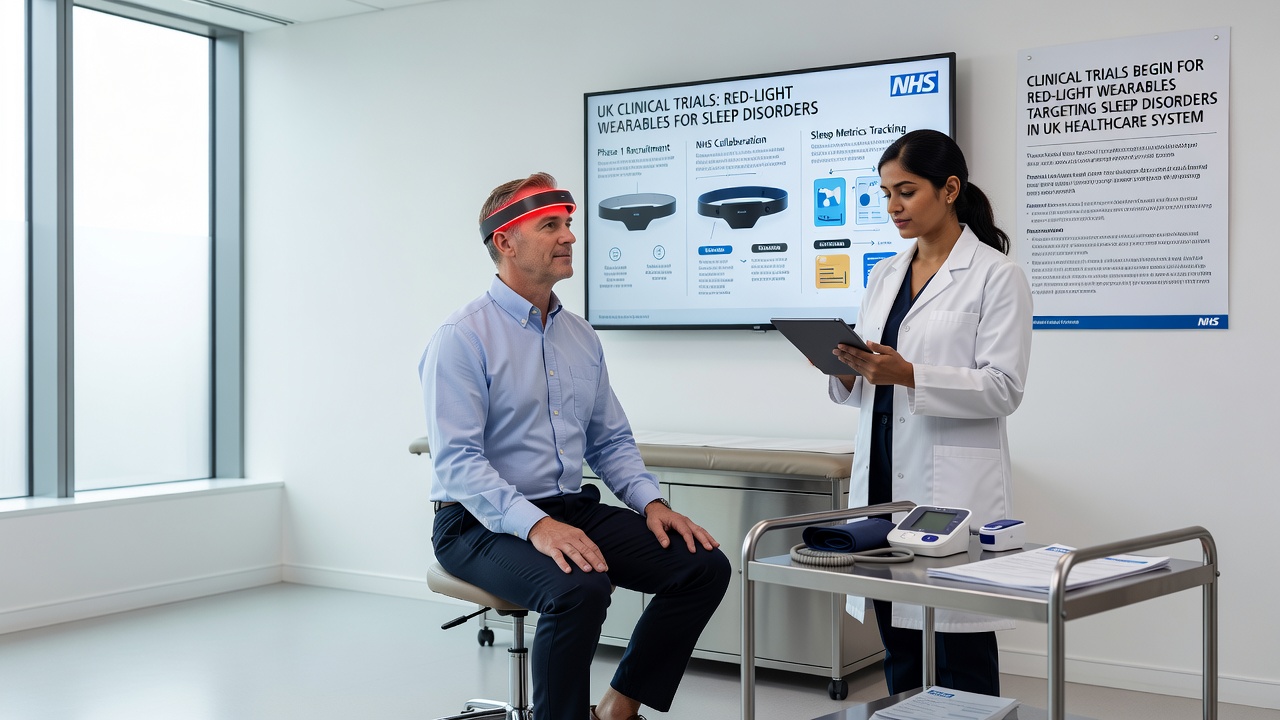
One study revealed that similar technology tested in Canadian clinics produced a 15 percent average improvement in total sleep time among those with moderate insomnia, adn UK investigators plan to compare these results against their own cohort to identify any regional variations tied to latitude or lifestyle factors. The trial structure includes randomized control arms where some volunteers receive sham devices, which helps isolate the specific contribution of the red-light component while maintaining blinding procedures for both participants and assessors.
Technology Specifications and Integration With Healthcare
Wearable units feature adjustable intensity settings that range from low-level ambient glow to targeted beams directed toward the eyes or wrists, and manufacturers have incorporated sensors that log usage duration along with ambient light levels in the surrounding space. These features allow clinicians to review compliance data remotely through secure NHS-linked platforms, which reduces the need for frequent in-person visits and supports broader access across rural and urban sites alike. Industry reports from organizations such as the Sleep Research Society highlight that device adherence rates improve when feedback loops provide users with simple progress summaries rather than raw numerical outputs.
Integration efforts focus on compatibility with existing electronic health records so that sleep metrics can feed directly into patient files, and this step aligns with NHS digital transformation targets that emphasize interoperability. Those who've studied similar rollouts in Australian healthcare systems note that early coordination between device developers and hospital IT departments often prevents later compatibility issues that delay widespread adoption.
Expected Data Outcomes and Regulatory Pathways
Researchers anticipate that results gathered through 2027 will inform submissions to the Medicines and Healthcare products Regulatory Agency, where evidence of efficacy and safety must meet thresholds established for Class IIa medical devices. Preliminary modeling based on earlier small-scale tests suggests potential reductions in reliance on pharmaceutical sleep aids, though full confirmation awaits the larger dataset. What's interesting is how the November 2026 start date coincides with updated NICE guidelines on non-pharmacological interventions for insomnia, which could accelerate consideration of red-light options once trial data matures.
Additional monitoring tracks secondary effects such as changes in daytime alertness and mood scores, since sleep improvements often produce ripple effects across other health domains. External links to resources like those maintained by the World Health Organization provide context on global sleep disorder prevalence, allowing UK teams to benchmark their findings against international patterns without relying on isolated regional statistics alone.
Conclusion
These trials represent a structured step toward incorporating red-light wearables into standard care pathways for sleep disorders, and continued data collection through the November 2026 phase and beyond will determine how quickly the approach moves from research settings into routine NHS offerings. The emphasis on objective measurements combined with regulatory alignment positions the work to contribute measurable insights to both national and international discussions on light-based therapies.